

Doctor explains: The gut-brain connection – why ME/CFS can cause food intolerances and IBS symptoms

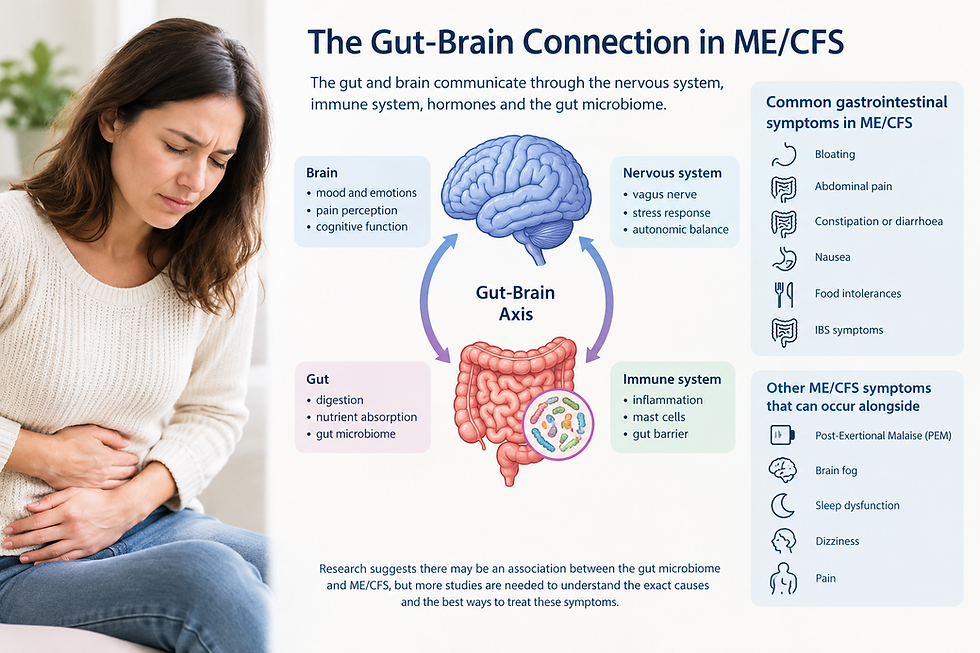
People with ME/CFS frequently report digestive symptoms alongside fatigue, brain fog and Post-Exertional Malaise (PEM). Bloating, abdominal discomfort, constipation, diarrhoea, nausea and food intolerance can become significant problems.
So why does this happen?
The answer may partly involve the complex communication between the digestive system, immune system, nervous system and the trillions of microorganisms living in the gut. This is often called the gut-brain axis.
As an ME/CFS specialist, I frequently see patients who have both post-exertional symptoms and gastrointestinal problems. Understanding the possible connection can help explain why ME/CFS is much more than simply feeling tired.
Post-Exertional Malaise (PEM) and digestive symptoms
The defining feature of ME/CFS is not ordinary tiredness. It is Post-Exertional Malaise (PEM) — a worsening of symptoms after physical, cognitive, or emotional activity that is disproportionate to the activity performed.
PEM can affect many parts of the body. During a crash, patients may experience increased fatigue, brain fog, pain, sleep disturbance, dizziness, and sometimes worsening gastrointestinal symptoms.
This means that someone may notice their digestion is relatively stable when their activity level is low, but develops increased nausea, abdominal discomfort, constipation or diarrhoea following a period of overexertion.
Recognising this pattern is important when considering post-exertional malaise (PEM) management.
The gut-brain connection in ME/CFS
The gut and brain communicate continuously through several pathways.
These include the nervous system, immune system, hormones and chemical substances produced by gut microorganisms.
The vagus nerve is one of the major communication pathways between the digestive system and brain. This is one reason why the gut-brain connection is relevant to research into conditions involving both gastrointestinal and neurological symptoms.
The gut microbiome can also produce metabolites that influence immune and metabolic processes.
Research has found differences in gut microbiome composition in some people with ME/CFS compared with healthy controls. However, an important distinction is needed: finding an association does not prove that microbiome changes cause ME/CFS. Researchers are still trying to establish which changes are causes, consequences or simply associated features of the illness.
Post-Exertional Malaise (PEM) and IBS symptoms
Irritable bowel syndrome (IBS) is particularly relevant.
People with ME/CFS commonly report gastrointestinal symptoms and IBS-type symptoms. A 2026 systematic review and meta-analysis found a substantial association between ME/CFS and IBS, although the studies showed considerable variation in how both conditions were defined.
IBS itself is considered a disorder of gut-brain interaction. Symptoms can include:
abdominal pain or discomfort
bloating
constipation
diarrhoea
alternating constipation and diarrhoea
urgency
nausea
increased sensitivity to certain foods
This does not mean that IBS is "all in the mind". The gut has its own nervous system and interacts continuously with the central nervous system, immune system and microbiome.
For some people with ME/CFS, treating coexisting IBS may therefore be an important part of overall symptom management.
Why do some people develop food intolerances?
Some people with ME/CFS describe developing new food sensitivities after an infection or during the course of their illness.
There are several possible explanations.
Changes in gut motility can alter how food moves through the digestive tract. Changes in the gut microbiome may influence fermentation and the production of metabolites. Visceral hypersensitivity can also make normal digestive processes feel uncomfortable.
Food intolerance can also be completely separate from ME/CFS. Lactose intolerance, coeliac disease, inflammatory bowel disease, gallbladder disease and other gastrointestinal conditions need to be considered when symptoms suggest them.
A new or progressive food intolerance should therefore not automatically be attributed to ME/CFS.
This is where appropriate ME/CFS testing and a sensible differential diagnosis for chronic fatigue syndrome are important.
Post-Exertional Malaise (PEM), diet and energy management
Eating can itself require energy, particularly for someone with severe ME/CFS.
Shopping, preparing meals, standing in the kitchen and washing dishes can all contribute to the total daily energy demand.
For someone trying to understand how to find your ME/CFS energy baseline, food preparation should therefore sometimes be considered alongside exercise, work and other activities.
Practical strategies may include:
preparing several meals at once when energy permits
using simple foods during periods of severe symptoms
sitting rather than standing when preparing food
keeping frequently used foods within easy reach
accepting help with shopping or cooking
using ready-made nutritious meals when necessary
avoiding unnecessary dietary restriction
For severe illness, low-energy meal prep for chronic illness can be an important practical consideration.
Post-Exertional Malaise (PEM) does not mean you need a restrictive diet
People with ME/CFS can encounter a huge amount of information online about "healing the gut", eliminating foods, supplements and special diets.
Some people may genuinely benefit from identifying a particular food intolerance. However, increasingly restrictive diets can also create problems, particularly if they result in inadequate calories, protein, vitamins or minerals.
NICE recommends adequate fluid intake and a balanced diet for people with ME/CFS, and recommends specialist dietetic assessment when someone is losing weight, at risk of malnutrition or following a restrictive diet.
There is currently insufficient evidence to recommend routine vitamin and mineral supplementation as a treatment for ME/CFS itself.
This is an important distinction between sensible nutritional support and the idea that a particular supplement or diet can "cure" ME/CFS.
What about probiotics and the microbiome?
Probiotics are often marketed as a treatment for gut problems and chronic fatigue.
Research into the microbiome in ME/CFS is interesting, but the clinical evidence remains limited. A systematic review specifically examining probiotics in CFS/ME found insufficient evidence to support probiotic treatment for ME/CFS, despite stronger evidence for some probiotic approaches in IBS.
This does not mean that probiotics are never useful. Someone with IBS may discuss an appropriate trial with their healthcare professional.
It does mean that microbiome testing, probiotics or expensive "gut healing" programmes should not automatically be presented as established ME/CFS therapy.
Post-Exertional Malaise (PEM), MCAS and food sensitivity
Another frequently discussed topic is the possible MCAS mast cell activation ME/CFS overlap.
Some people with ME/CFS report flushing, itching, gastrointestinal symptoms or reactions to particular foods and medications. These symptoms can have many possible explanations, including allergy, IBS, medication effects and other conditions.
MCAS is a specific clinical diagnosis and should not be assumed simply because someone has food sensitivities or multiple unexplained symptoms.
Similarly, gastrointestinal symptoms should not automatically be attributed to ME/CFS without appropriate assessment.
Could the gut eventually become part of ME/CFS testing?
This is an interesting area of ME/CFS research.
Scientists are investigating whether differences in the microbiome, intestinal barrier, microbial metabolites, immune signalling and metabolism could eventually help identify biological subgroups of patients.
However, there is currently no established gut microbiome test that can diagnose ME/CFS in routine clinical practice.
Future ME/CFS testing may become more biologically precise as researchers identify reliable biomarkers and patient subgroups. This could potentially contribute to more personalised ME/CFS therapy.
For now, the gut should be viewed as one component of a complex multisystem illness rather than as a single explanation for ME/CFS.
Post-Exertional Malaise (PEM): look at the whole patient
The most useful approach is often to look at the whole clinical picture.
Someone with ME/CFS may have Post-Exertional Malaise (PEM), sleep dysfunction, brain fog, orthostatic intolerance, pain and gastrointestinal symptoms at the same time.
The digestive symptoms may represent IBS, a separate gastrointestinal condition, consequences of altered gut-brain signalling, medication effects, dietary factors or a combination of these.
A careful assessment can help distinguish these possibilities.
An online ME/CFS doctor, ME/CFS telehealth doctor, chronic fatigue syndrome specialist or specialist service can help review the overall pattern rather than treating each symptom in isolation.
This approach can be particularly useful for people looking for an online ME CFS clinic, a post viral fatigue doctor, a fibromyalgia specialist online, or assessment following Long COVID.
The emerging science around the gut-brain axis is genuinely interesting. But the message from current research is one of cautious optimism: there are plausible biological connections worth investigating, while much remains to be established before microbiome-based treatments can be considered proven ME/CFS therapy.
You can also explore the clinic's ME/CFS and related conditions information and read more about ME/CFS research, ME/CFS testing and ME/CFS therapy on the UK ME/CFS Specialist blog.
If you would like to discuss whether your symptoms fit ME/CFS, fibromyalgia, Long COVID or another post-viral condition, you can book an online specialist consultation or learn more about Prof. Dmitry Pshezhetskiy and his clinical and research work.
Prof. Dmitry Pshezhetskiy, MBBS, PhD, MRCGP
GMC 7494518 — Registered Medical Practitioner (GP)
Medical Disclaimer: The information provided in this article is for general educational and informational purposes only and does not constitute personalized medical advice, formal diagnosis, or treatment planning. Reading this content or communicating via this website does not establish a doctor-patient relationship with Prof Dmitry Pshezhetskiy. ME/CFS affects every individual differently; strategies discussed may not be suitable or safe for your specific health situation. Always consult your GP, specialist healthcare team, or NHS 111 regarding your personal medical concerns. In a medical emergency, please dial 999 or visit your nearest Emergency Department immediately. For a full disclaimer, see Medical Disclaimer & Terms of Use in Terms and Conditions on the policies page.
If you would like specialist assessment, learn more about our online consultations.


Comments